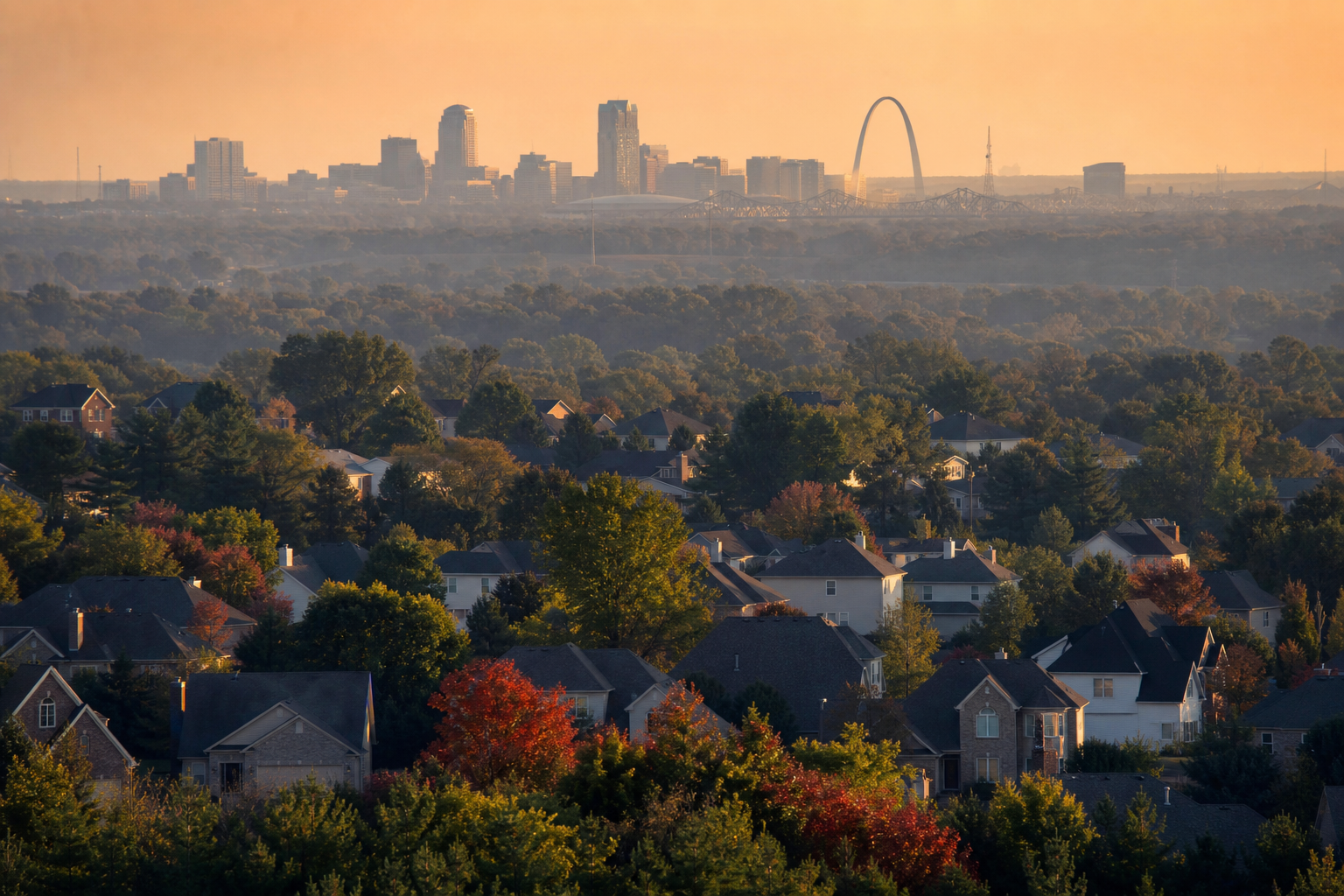
What Are Closing Costs When Buying a House in St. Louis?
This is a subtitle for your new post

What are closing costs when buying a house in St. Louis? Closing costs are the fees and prepaid expenses due at the closing table — separate from your down payment. In the St. Louis area, they typically run 2–5% of the purchase price.
You saved your down payment. You got pre-approved. You found the house. And then someone handed you a closing disclosure with a number nobody warned you about.
It happens constantly — and not because buyers are unprepared. It happens because closing costs are one of the most consistently under-explained parts of the homebuying process. Your lender talks about your monthly payment. Your agent talks about the offer price. And somewhere in the middle, a four-to-five-figure line item gets introduced like it was always obvious.
It wasn't obvious. And you deserved to know about it earlier. So here's everything you need to know before you ever make an offer on a home in the St. Louis area.
The Number Nobody Told You About
In the St. Louis metro — whether you're buying in the City, the County, St. Charles County, or Jefferson County — closing costs typically land between 2% and 5% of the purchase price.
The good news is that none of this has to be a surprise if you know what to ask for upfront.
What's Actually Inside a Closing Cost Estimate
Closing costs aren't one fee — they're a collection of line items that add up. Here's what you'll typically see on a St. Louis area closing disclosure:
Lender fees
Your lender charges for the work of underwriting and processing your loan. This includes the origination fee (typically 0.5%–1% of the loan amount), an appraisal fee, a credit report fee, and sometimes a loan processing or underwriting fee. These vary by lender, which is one reason why shopping multiple lenders — not just rates — matters.
Title fees
A title search confirms that the seller actually owns the property free and clear and that there are no outstanding liens or legal claims against it. Title insurance protects you (and your lender) if something turns up after closing. In Missouri, both lender's title insurance and owner's title insurance are standard — the lender's policy is required; the owner's policy is strongly recommended.
Prepaid expenses
This is the portion of closing costs that often surprises buyers the most, because you're not paying a fee — you're paying ahead. Prepaid expenses typically include:
- Your first year of homeowner's insurance, paid in full at closing
- Prepaid property taxes, prorated from your closing date through the end of the tax period
- Prepaid mortgage interest, covering the days between your closing date and your first full mortgage payment
These aren't fees the bank keeps — they go into your escrow account or directly to the insurer. But they're real dollars out of pocket on closing day.
Government recording fees
The sale has to be officially recorded with the county recorder of deeds. In St. Louis County, the City of St. Louis, St. Charles County, and Jefferson County, these fees are relatively modest — typically a few hundred dollars — but they vary by jurisdiction.
Miscellaneous fees
Depending on your transaction, you may also see fees for a survey, a flood certification, a home warranty (if negotiated into the contract), wire transfer fees, or attorney review fees if you choose to have an attorney present at closing.
Why St. Louis Has Some Unique Wrinkles
Buying in the St. Louis metro comes with a few factors that affect your closing costs in ways buyers from other markets don't always anticipate.
The City and County are separate jurisdictions. St. Louis City is an independent city — it's not part of St. Louis County. That matters for closing costs because property taxes are assessed and collected differently on each side of that line. If you're buying mid-year, your tax proration at closing will be calculated based on the applicable mill levy for whichever jurisdiction you're buying in. The difference can be hundreds of dollars depending on the property.
Missouri uses a buyer-friendly property tax structure. Missouri property taxes are paid in arrears, meaning you pay last year's taxes this year. At closing, the seller typically credits you for the portion of the year they owned the home, and you take over from there. How that proration works out depends on your closing date and the county you're buying in.
Some municipalities have transfer fees; most don't. Unlike some markets where a real estate transfer tax is standard, Missouri does not impose a statewide transfer tax. Some municipalities may have local fees, but this is far less common than in states like Illinois. Your title company will flag any applicable fees during the title search.
The One Question Most Buyers Forget to Ask
Here's where buyers consistently leave money on the table: they ask their lender what their monthly payment will be, and they forget to ask for a Loan Estimate.
The Loan Estimate is a standardized form your lender is required to provide within three business days of receiving your loan application. It breaks down your estimated closing costs line by line, so you know exactly what you're walking into before you're anywhere near the closing table.
Request it early. Compare it across lenders. And then review the final Closing Disclosure — which you'll receive at least three business days before closing — against that original estimate to make sure nothing has changed unexpectedly.
A good agent will prompt you to do this. If they haven't, ask.
Can You Reduce or Roll In Closing Costs?
Yes — sometimes. A few options worth knowing about:
Seller concessions. In a negotiation, you can ask the seller to contribute toward your closing costs. The seller agrees to credit you a set dollar amount at closing, which offsets what you bring to the table. Not every seller will agree, and the amount that's allowable depends on your loan type, but it's a legitimate negotiating tool your agent should be using when market conditions allow.
Lender credits. Some lenders offer a higher interest rate in exchange for a credit toward your closing costs — essentially rolling part of the cost into your loan. This can make sense if you're cash-constrained at closing, though you'll pay more over the life of the loan.
Missouri assistance programs. If you're a first-time buyer or haven't owned a home in the past three years, you may qualify for programs through the Missouri Housing Development Commission (MHDC) that include closing cost assistance. These programs are worth exploring before you assume the full out-of-pocket number is fixed. You can find current program details at MHDC's official site.
For additional guidance on what closing costs typically include and how they vary by loan type, the Consumer Financial Protection Bureau publishes a plain-language breakdown that's worth bookmarking.
FAQ
How much should I budget for closing costs in St. Louis? Plan for 2–5% of your purchase price on top of your down payment. The lower end of that range is more likely if you're using a competitive lender with low origination fees; the upper end reflects transactions with more prepaid expenses or lender fees. Your Loan Estimate will give you a specific number for your situation.
Who pays closing costs in Missouri — the buyer or the seller? In Missouri, closing costs are typically split — buyers pay their lender fees, title insurance, and prepaid expenses, while sellers pay their own title and commission costs. However, the split is negotiable, and buyers can request seller concessions to reduce their out-of-pocket expenses at closing.
Can closing costs be included in a mortgage in St. Louis? Generally, no — closing costs are due in cash at the closing table and can't be folded into a conventional mortgage. However, some programs (like VA loans or certain FHA structures) allow closing costs to be financed, and seller concessions or lender credits can reduce what you bring out of pocket. Discuss the specifics with your lender early in the process.
Know the Full Picture Before You Make an Offer
The buyers who feel blindsided at closing are almost always the ones who never had this conversation upfront. The buyers who feel confident? They asked about closing costs on day one — before they fell in love with a house, before they made an offer, before they were emotionally committed to a number.
If you're buying in the St. Louis area and want to know exactly what your full out-of-pocket costs look like at your price point — before you ever write an offer — that's a conversation I'm happy to have.
Reach out anytime. I'd love to help you figure out your next move.
Cheryl Carosone | Realtor — Campbell House and Home Serving St. Louis City, St. Louis County, St. Charles County, and Jefferson County 314-374-3069 · cheryl@chhstl.com · CherylCarosone.RealtorThe body content of your post goes here. To edit this text, click on it and delete this default text and start typing your own or paste your own from a different source.